How Kent Delivered the World’s Largest Smoke Curtain Packages at Hong Kong International Airport
Fire and Smoke Curtains for Landmark Airport Projects
Modern airports are among the world’s most sophisticated infrastructure projects. Designed to handle millions of passengers every year, today’s terminals feature expansive atriums, interconnected concourses, retail destinations, baggage halls and open public spaces that create an exceptional passenger experience.
However, these architectural features also introduce one of the most complex fire engineering challenges: how to control the spread of smoke and fire while preserving open, visually striking spaces.
This is why fire and smoke curtains have become an essential component of modern airport fire protection strategies.
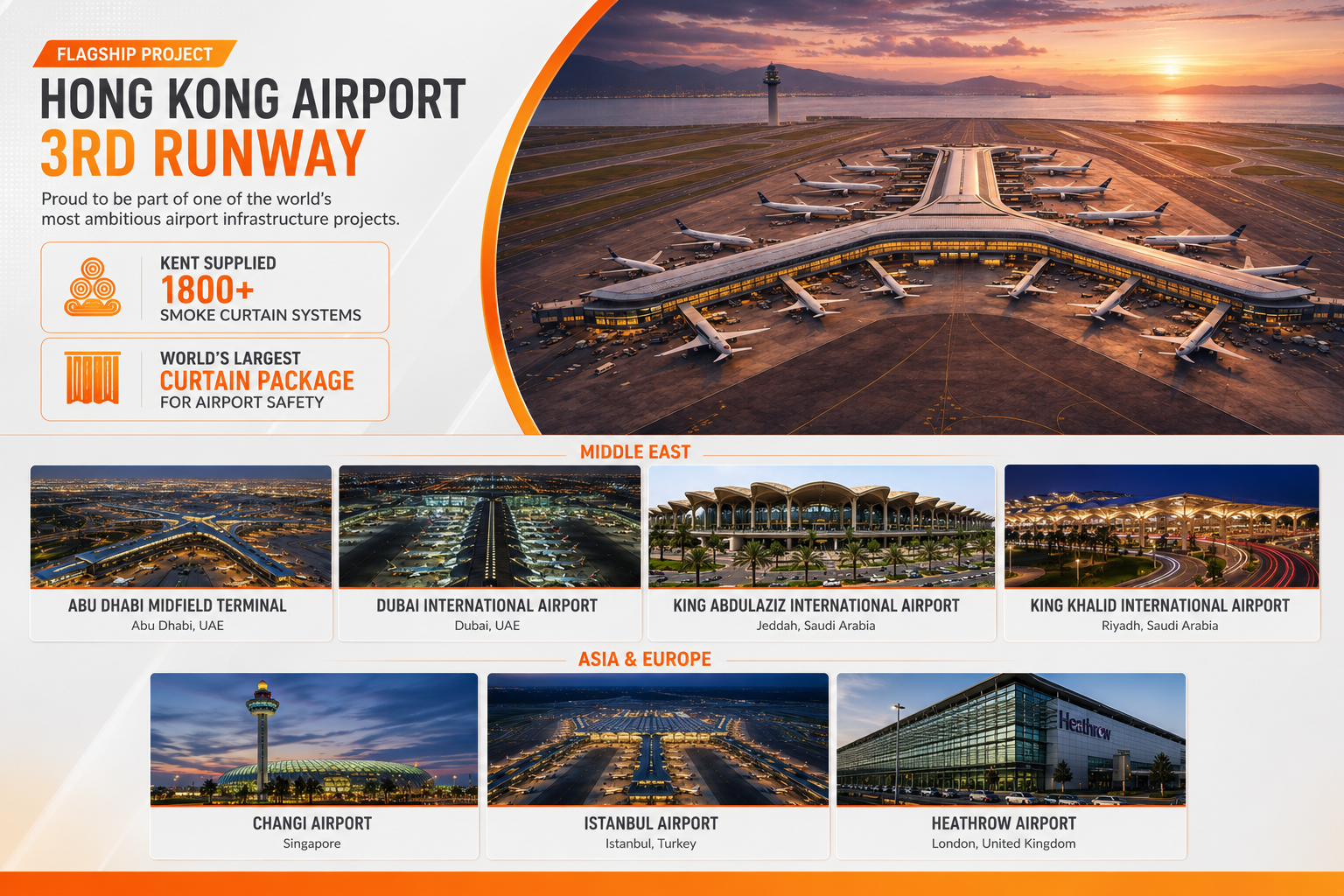
Case Study: How Kent Delivered the World’s Largest Smoke Curtain Packages for Hong Kong International Airport’s Third Runway Concourse
Hong Kong International Airport’s Third Runway Concourse at Chek Lap Kok is a major aviation development designed to accommodate increasing passenger capacity and support the airport’s long-term growth.
Its large concourses, passenger terminals, departure and arrival zones, and connecting gates required an extensive smoke-control strategy. Nearly 2,000 automatic smoke curtain units—providing approximately 1,875 linear metres of coverage—had to be engineered, manufactured and delivered within a critical project programme.
The engineering challenge: smoke compartmentation beneath undulating ceilings
The Third Runway Concourse featured undulating ceilings with varying installation levels. Consequently, individual smoke curtain segments had to deploy from different heights while forming a coordinated smoke barrier at a consistent final level. Some locations required unusually long curtain drops, wide assemblies and multiple-roller configurations. Kent’s tested and certified smoke curtain systems provided the technical foundation needed to address these requirements.
The availability of solutions evaluated to applicable BS EN and UL standards gave project stakeholders confidence in Kent’s ability to engineer compliant systems for large and complex openings. Final system selection, configuration, and approval were coordinated in accordance with the project-specific fire strategy and authority requirements.
This required careful engineering of:
• Curtain dimensions and individual drop lengths
• Deployment levels across changing ceiling profiles
• Multiple-roller configurations for wider openings
• Interfaces with surrounding architectural and building services
• Coordinated operation of adjoining curtain segments
• System controls, testing and commissioning
Kent had previously addressed comparable design conditions during the development of the Midfield Terminal in Abu Dhabi. However, the scale, quantity and delivery requirements of the Hong Kong project created an entirely new logistical and production challenge.
Delivering nearly 2,000 smoke curtain units
Project stakeholders needed confidence that the selected manufacturer could manage the complete package—from engineering and compliance review to production, delivery and commissioning support.
Successful delivery depended on more than manufacturing capacity. Continuous coordination was required between Kent, the regional installation partner, the airport project team and other stakeholders.
Kent approached the development as one coordinated project rather than as a collection of individual curtain units. Its engineers across Sales, Estimation, Design and Production, supported by the Procurement and Logistics teams, worked closely with the regional supply and installation partner throughout the project.
Kent’s established supply chain and experience delivering smoke and fire curtain systems to more than 34 international markets supported the project’s demanding material, manufacturing and logistics programme.
The project demonstrates Kent’s ability to combine specialist engineering, certified smoke-control technology, large-scale manufacturing and international logistics within a single coordinated package.

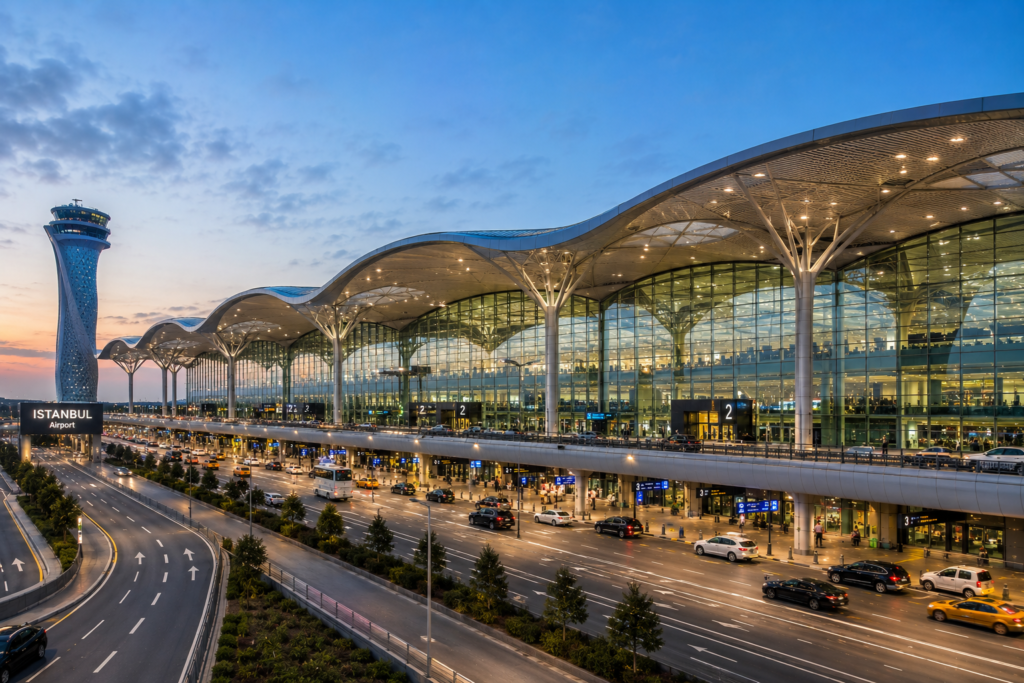
Trusted by Leading Airports Worldwide
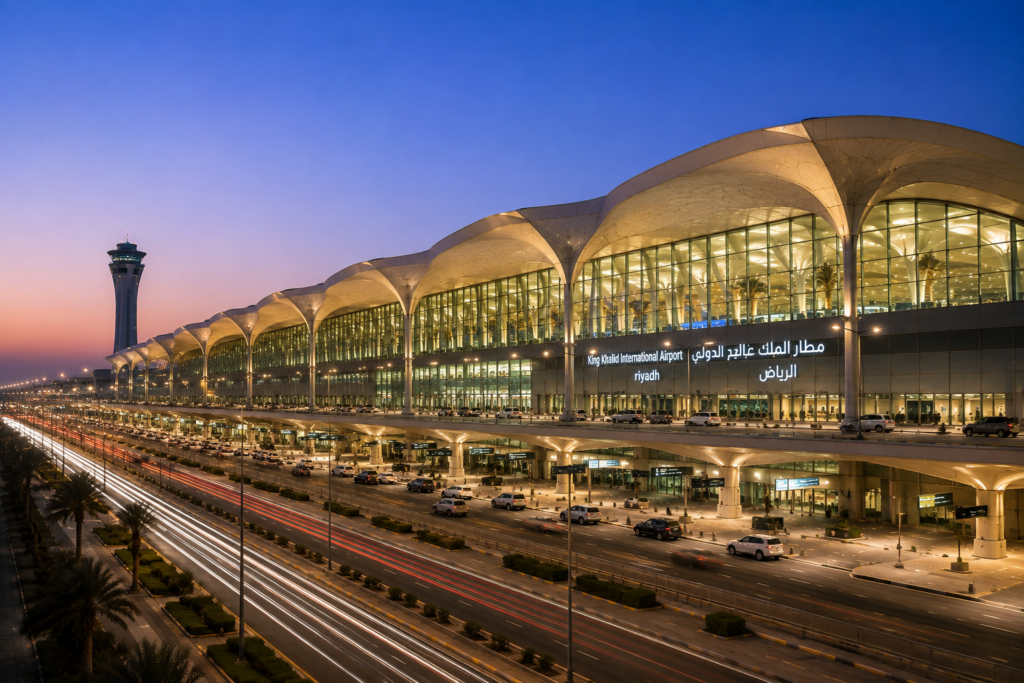
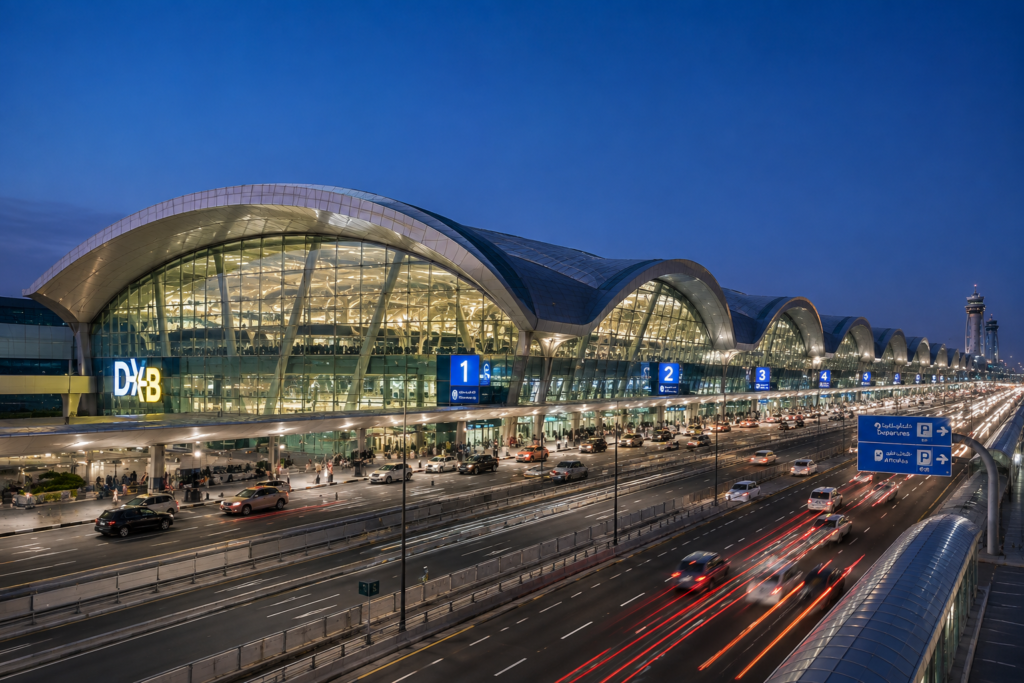
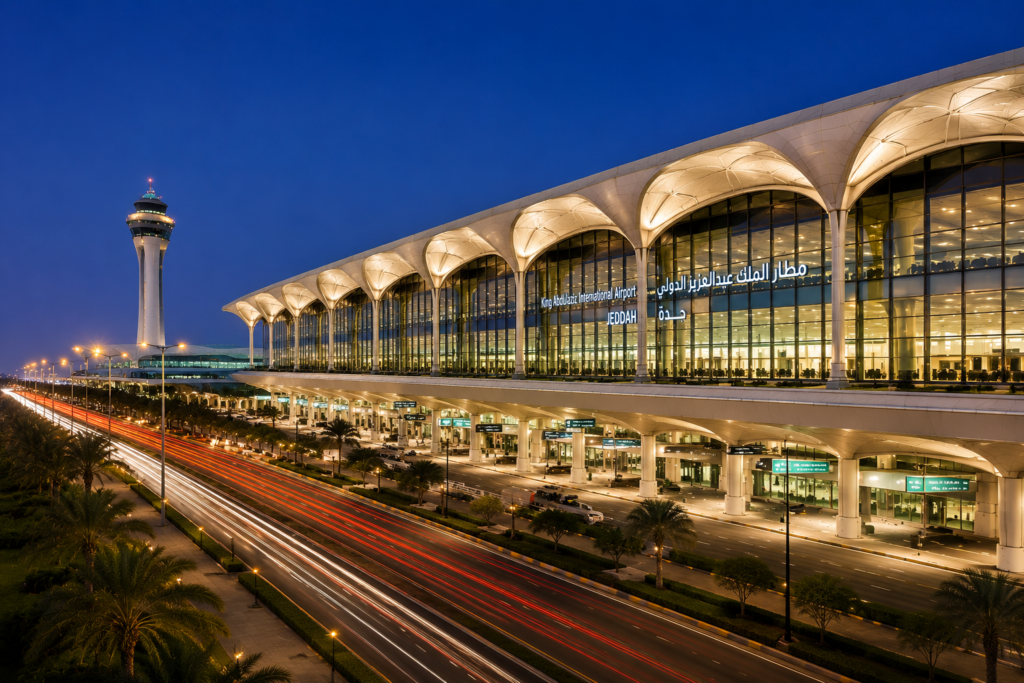
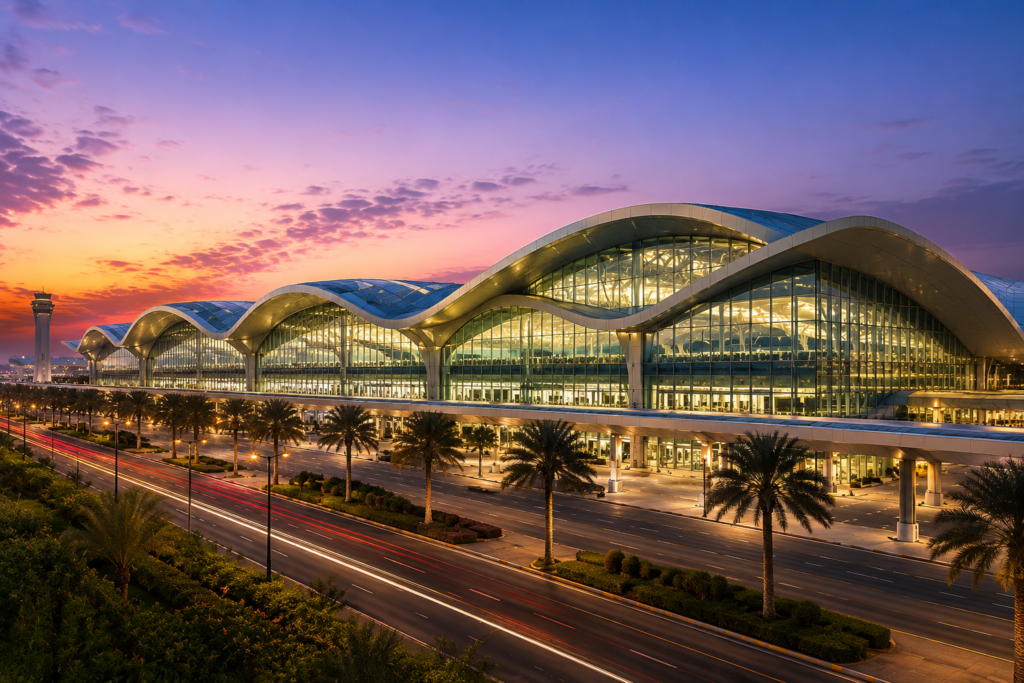
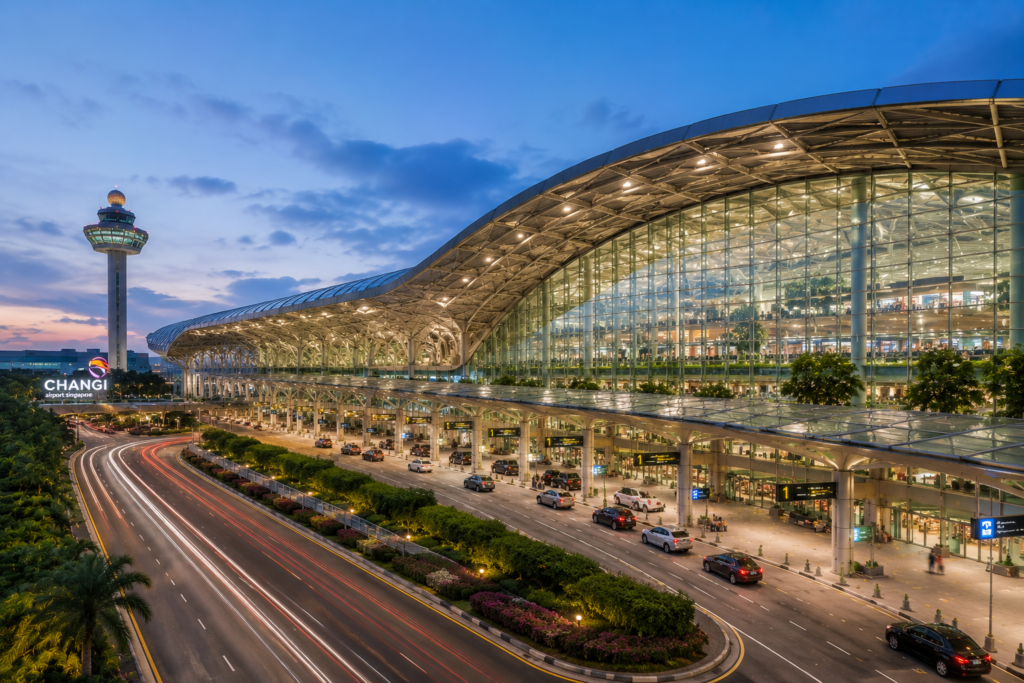
Kent has successfully delivered smoke and fire curtain solutions for major airport developments across the Middle East, Asia, Europe, Africa and Australia, including:
1. Dubai International Airport, UAE – Fire and Smoke Curtains
2. Changi Airport, Singapore – Fire and Smoke Curtains
3. Midfield Terminal – Abu Dhabi International Airport, UAE – Smoke Curtains
4. King Khalid International Airport, Saudi Arabia – Fire Curtains
5. King Abdulaziz International Airport, Saudi Arabia – Fire Curtains
6. New Doha International Airport, Qatar – Draft Curtains
7. Heathrow Airport, United Kingdom – Fire and Smoke Curtain Solutions
8. Broome International Airport, Australia – Fire Curtains
9. Vadodara Airport – ATC Tower and Administration Building, India – Fire Curtains
Why Leading Airport Projects Choose Kent
Kent combines independently tested and certified fire and smoke curtain systems with specialist engineering, scalable production and international logistics capabilities—providing airport project teams with reliable support from early design through installation and commissioning.
1. Globally recognised certifications: Selected systems carry UL Listings and Warringtonfire Certifire certification, supported by relevant fire-test reports, assessment evidence and applicable Authority Having Jurisdiction (AHJ) approvals.
2. Specialist engineering: Solutions for extensive widths, long drops, compact headboxes, multiple-roller configurations and complex ceiling geometries.
3. Dedicated design and specification support: Kent’s Design, R&D and Specification teams coordinate with airport authorities, architects, fire and life-safety consultants, MEP engineers and contractors.
4. Factory Production Control: Quality, inspection, labelling and packaging are controlled in accordance with approved drawings, tested standards and installation sequences. Kent’s manufacturing facility is audited under applicable UL and Warringtonfire certification programmes.
5. Scalable production and international logistics: Kent’s Dubai manufacturing facility has the capacity to produce up to 600 rollers per month, supported by phased shipments, export documentation and regional coordination across more than 34 international markets.
6. Proven large-scale project delivery: Experience includes nearly 2,000 smoke curtains for Hong Kong International Airport and more than 2,000 projects across 34+ international markets.
7. End-to-end project support: Specification, engineering, manufacturing, delivery, installation guidance and commissioning support are coordinated as one complete project solution.
Why Is Early Design Integration Important for Airport Fire and Smoke Curtains?
Early integration allows architects and fire engineers to fully explore the capabilities of fire and smoke curtain systems, including extensive widths using multiple rollers, long drops, compact headboxes, and curved, faceted, corner or undulating configurations. Depending on the selected system and certification, fire curtains can provide up to 240 minutes of integrity, together with radiation-control or insulation options. Understanding these capabilities early helps project teams create open, visually coordinated airport spaces and effective compartmentation strategies without compromising life safety.
During specification and BIM coordination, teams should confirm the required performance, applicable standards, opening geometry, structural supports, deployment paths, architectural and MEP interfaces, fire-alarm and SHEVS control logic, egress requirements, and access for testing and maintenance.
Kent supports this process through product selection, specification assistance, bespoke engineering, BIM coordination and certification guidance, delivered by its dedicated Design Assistance and Specification team, which has experience working with more than 140 architectural and FLS consultancy firms globally.
If curtains are considered only at a later stage, they may be limited to protecting an already-defined opening; early involvement allows them to become an integral part of the airport’s architectural, fire-safety and smoke-control strategy.
Planning a new airport terminal, expansion or fire-safety upgrade?
Engage Kent before ceilings and MEP routes are frozen for design assistance, specification support, project-specific drawings and system selection.
Contact Us,
ABIN VARUGHESE
Deputy Manager – Sales & Marketing
Call/ Whatsapp: +971506604689